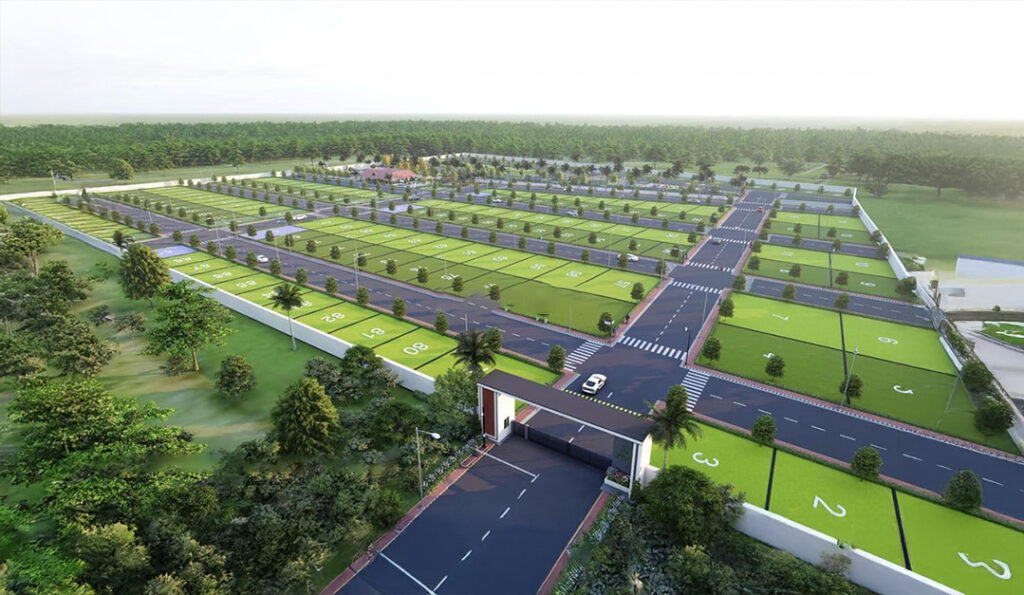
Dreaming of building your own home in the bustling city of Hyderabad? A 100 square yards (sq yds) plot is a very common size for residential construction in many parts of the city. But one of the most important questions that comes to mind is: How many floors can be constructed on a 100 sq yds plot in Hyderabad?
The answer isn’t as simple as just a number. It depends on various factors, including the latest government regulations, building codes, and your specific plot’s location. This detailed guide, written by Karna Raju, will walk you through everything you need to know, from the basic rules to the practical realities of building on a small plot in Hyderabad. We’ll break down the legal aspects, discuss the importance of setbacks and FSI, and help you understand the potential of your 100 sq yds plot in Hyderabad.
By the time you finish reading, you’ll have a clear picture of what’s possible and what you need to do to get started on your construction journey.

Understanding the Rules: The GHMC/TS-bPASS Regulations
Building a house in Hyderabad requires you to follow the rules set by the Greater Hyderabad Municipal Corporation (GHMC) and the state-level Telangana State Building Permission Approval and Self-Certification System (TS-bPASS). These are the official bodies that govern construction permissions and regulations.
Key Regulations for Small Plots
For plots up to 75 square yards, you don’t need a formal building permission, but you are still required to register your construction and adhere to the regulations. For plots from 75 square yards to 600 square yards, a self-certification process is in place. This makes the process faster and more transparent, but it doesn’t mean you can ignore the rules.
The number of floors you can build is directly related to the maximum permissible height for your plot size. For a plot up to 100 sq yds, the maximum height allowed is typically 9 meters.
Now, let’s connect this height limit to the number of floors. A standard residential floor height, including the slab thickness, is usually between 3 to 3.2 meters (about 10 to 10.5 feet).
Using this simple calculation, a 9-meter height limit allows for:
- Ground Floor + First Floor + Second Floor (G+2). This is a total of three floors.
Therefore, for a 100 sq yds plot in Hyderabad, the general guideline is that you can build a G+2 structure. This means a ground floor and two additional floors above it.
This is a general rule, and there are other factors that can influence this, which we will explore in the next sections.
The Importance of FSI and Setbacks
To truly understand what you can build, you need to be familiar with two very important concepts: Floor Space Index (FSI) and setback rules. These terms might sound complex, but they are crucial for any construction project.
What is Floor Space Index (FSI)?
Floor Space Index, also known as Floor Area Ratio (FAR), is the ratio of the total built-up area of all floors in a building to the total area of the plot. Simply put, it tells you how much you can build on your land.
Interestingly, Hyderabad is unique among major Indian cities because it has no FSI cap for high-rise buildings and commercial zones. However, for smaller residential plots like a 100 sq yds plot in Hyderabad, the number of floors is primarily controlled by the height restriction and the setback rules, not FSI. While FSI is a crucial concept for large-scale projects, for a small plot, the height and setback rules are the primary limiting factors. This is a very important point to remember.
Understanding Setback Rules
Setbacks are the open spaces you must leave on all sides of your building from the plot boundary. These rules are in place for safety, ventilation, and access for emergency services. For a 100 sq yds plot in Hyderabad, the setback rules are as follows:
- Front Setback: 2.5 meters (approximately 8.2 feet)
- Rear and Side Setbacks: The rules can vary slightly depending on the specific location and road width. However, for a plot of this size, you are typically required to leave open space on the sides and back as well.
These setback rules directly impact the actual built-up area on each floor. For instance, if your plot is 30 feet by 30 feet, you can’t build on the entire area. You have to leave space on all sides, which reduces the usable carpet area on each floor. The number of floors you can build might be G+2, but the size of each floor will be smaller than the total plot size.
Practical Considerations Beyond the Rules
While the rules provide a clear framework, there are several practical factors that homeowners need to consider when building on a 100 sq yds plot in Hyderabad.
Planning for the Future
Think about your family’s needs. A G+2 structure provides ample space for a small to medium-sized family. You can plan for a parking area on the ground floor, living space on the first, and bedrooms on the second. When you are planning, it’s essential to consider the layout and how you will use each floor.
Construction Costs and Budget
Building multiple floors means a higher overall construction cost. The foundation needs to be strong enough to support the weight of the entire structure. The cost per square foot will also vary depending on the quality of materials and finishes you choose. It’s a good idea to work with an experienced builder or architect who can give you a realistic budget.
The Role of an Architect
Working with a professional architect is crucial, especially on a smaller plot. They can help you design a space that is functional, well-ventilated, and compliant with all the rules. An architect can maximize the usable space within the limitations of the GHMC building bye-laws. They will ensure your plans meet the local building regulations and help you get the necessary approvals.
Frequently Asked Questions (FAQs)
1. What is the maximum height allowed for a 100 sq yds plot in Hyderabad?
The maximum permissible height is 9 meters, which typically allows for a Ground + 2 floors structure.
2. Is building permission required for a 100 sq yds plot?
For plots from 75 to 600 sq yds, a self-certification process through the TS-bPASS system is required. Formal building permission is not needed, but you must still comply with all rules.
3. What are the setbacks for a 100 sq yds plot in Hyderabad?
A front setback of 2.5 meters is mandatory. Setbacks on the rear and sides also apply, and they vary based on the specific location and road width.
4. What is FSI and does it apply to my 100 sq yds plot?
FSI is the ratio of built-up area to plot area. While Hyderabad has no FSI cap for high-rise buildings, the number of floors on a 100 sq yds plot is primarily limited by the building height and setback rules.
5. Can I build more than G+2 if I pay a penalty?
Constructing more floors than the permissible limit is considered an illegal construction. It can lead to heavy fines, demolition, or other legal consequences. It’s always best to stick to the rules and get your plan approved.
6. Do I need to get an occupancy certificate?
Yes, once the construction is complete, you must apply for an occupancy certificate to confirm that your building is safe to live in and has been built according to the approved plan.
7. What if my plot is in a different municipality or a Gram Panchayat?
The rules mentioned here are for areas under GHMC and HMDA. If your plot is in a different municipality or a Gram Panchayat, you need to check their specific building bylaws as they might be different.
8. What is the minimum road width required to construct on a 100 sq yds plot?
A minimum road width is required to get building permission. This is to ensure proper access for vehicles, including emergency services. You should check the specific requirements based on your plot’s location.
9. What is the best way to get accurate information about my plot?
The most reliable way is to visit the local GHMC or HMDA office or check the official TS-bPASS portal. You can also hire a professional architect or builder who is well-versed in the latest regulations.
10. Can I build a commercial building on a 100 sq yds plot?
The rules for commercial construction are different from residential ones. The number of floors, setbacks, and other requirements depend on the specific zoning of your plot. You must check the official zoning plan.
Conclusion: Building Your Dream Home in Hyderabad
Building a home on a 100 sq yds plot in Hyderabad is a fantastic opportunity to own a piece of this vibrant city. The key is to be well-informed and follow the GHMC and TS-bPASS rules. By understanding the height restrictions, setback requirements, and the importance of a well-planned design, you can construct a safe and beautiful home.
The general rule of thumb is that you can build a G+2 structure, giving you a total of three floors. Always work with licensed professionals to ensure your project is compliant and hassle-free.
For anyone looking to invest in residential plots, knowing these regulations is the first step towards a smart and secure investment. If you are in the market for a plot, look no further than our exclusive listings.
Ready to Find Your Perfect Plot?
Are you inspired to start your construction journey in Hyderabad? Finding the right plot is the most important step. We, at plotsforsalehyd.in, specialize in providing genuine and legally compliant plots across Hyderabad. With over a decade of experience, we have helped thousands of families find their dream location. Our listings are meticulously verified, ensuring you get a hassle-free experience.
Karna Raju, a name you can trust in the real estate sector, is dedicated to helping you make informed decisions. We offer personalized consultations, property tours, and full legal support to ensure your transaction is smooth and secure. Don’t let the complexities of building stop you. Let us help you find the perfect 100 sq yds plot in Hyderabad that fits your needs and budget. Visit our website today at plotsforsalehyd.in and take the first step towards building your future.